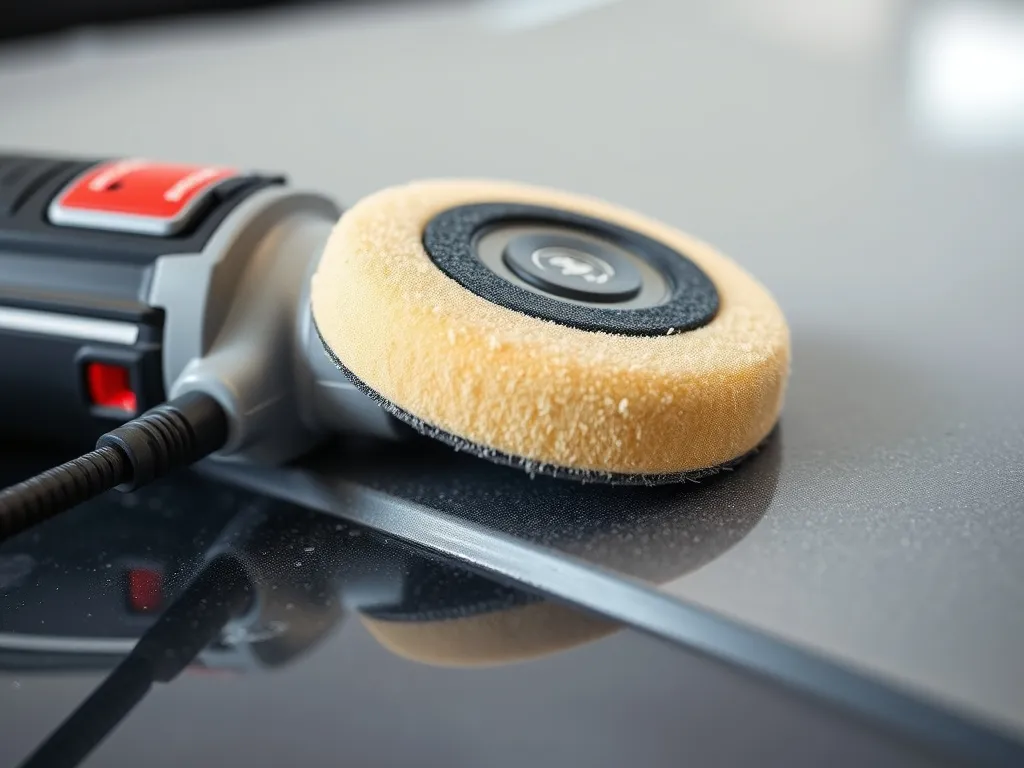
How swirl marks and haze form
Paint on a car collects fine scratches from washing and drying. Automatic car washes and dirty sponges drag grit across the clear coat. Each pass leaves a thin mark that catches light differently than the surrounding paint. Over time these marks build into a pattern known as swirl marks. Sunlight and oxidation add a separate problem called haze. Ultraviolet rays break down the clear coat and dull its shine. A car parked outside shows this wear faster than one kept in a garage. Haze often looks like a milky film across the paint under direct light.
Light scratches come from branches, keys, or careless contact in a parking lot. These marks sit shallow in the clear coat rather than the paint underneath.
A trained eye can tell the difference between a scratch that can be polished out and one that reaches the base color. That distinction shapes what correction work can achieve on a given panel.
How correction differs from washing
Washing removes loose dirt and film sitting on top of the paint. It does nothing to the microscopic scratches already embedded in the clear coat.
Paint correction uses machine polishing to level the clear coat around those scratches. The result is a surface that reflects light evenly instead of scattering it.
Paint correction removes a thin layer of clear coat to refine the finish. The work proceeds in stages, starting with a compound and moving to finer polishes, with each stage removing less material than the last.
Because correction removes clear coat, it is not a step to repeat casually.
A detailer measures the coat's thickness before deciding how much correction a car can take. Cars with thin clear coat from age or past sanding have less room to work with. This is why an inspection comes before any correction begins.
What a correction can address
A correction can reduce or remove swirl marks across a hood, doors, and trunk. It can also soften the milky look of oxidation-related haze in many cases. Light scratches from branches or careless washing often polish out during the process. The paint underneath becomes visible again once the clogged clear coat is leveled.
Correction also brings back reflection and depth in the color coat. Dark paint colors in particular show scratches more clearly, so the change is often visible immediately after polishing.
A car that looked dull under showroom lighting can regain clarity in its finish. This is a cosmetic process aimed at the top layer of paint.
Results depend on how much clear coat remains and how deep the damage sits. A panel with heavy history of scratching may need more than one pass to improve. Some areas respond better than others depending on prior repairs or repaints. A detailer can walk through which panels will show the most improvement.
What a correction cannot fix
Correction cannot repair scratches that go through the clear coat into the base color.
Deep scratches, dents, and chips need separate repair or repainting to address. Rust that has already formed under the paint is a different issue for a body shop. A correction only works on the surface layer of intact paint.
It also cannot add clear coat back to a panel that has been over-polished before. If the coat is already thin, aggressive correction is not a safe option.
In that case, a detailer may recommend a lighter polish instead of a full correction. The goal is to improve appearance without removing paint that cannot be replaced.
Correction does not include protection products like wax or sealant on its own. Those steps typically follow correction work to help the fresh finish stay clean longer. Anyone booking a correction should ask whether protection is included or priced separately. Knowing the scope in advance avoids confusion about what the service covers.
Preparing for a correction appointment
A car should arrive reasonably clean so the technician can inspect the paint clearly. Dirt and grime on the surface can hide scratches or make them harder to assess. Pointing out specific problem areas, like a hood with heavy swirls, helps guide the work. A short conversation before the appointment sets expectations for what will be addressed. Correction takes time because each panel is polished in stages and checked under bright light. Leaving the car for the full appointment window allows the process to be done properly. Rushing a correction can leave scratches only partly removed or introduce new marks. Planning enough time in the schedule matters as much as the polishing itself.
Photos taken before the work begins can help track the change afterward. They also give a reference point if a specific scratch or mark was a main concern.
Bringing up any recent repairs or repaints lets the detailer adjust the approach for that panel. This kind of detail makes the appointment more efficient from the start.
Talking through a correction
Paint correction removes swirl marks, haze and light surface scratches. The service is done indoors by appointment, which allows the polishing stages to be checked under consistent light.
Anyone with questions about whether their car's paint is a good candidate can ask before booking. Call (360) 555-0138 or send the form to set up a time.
Glossmere Detailing
Call (360) 555-0138 or send the form to request an appointment.