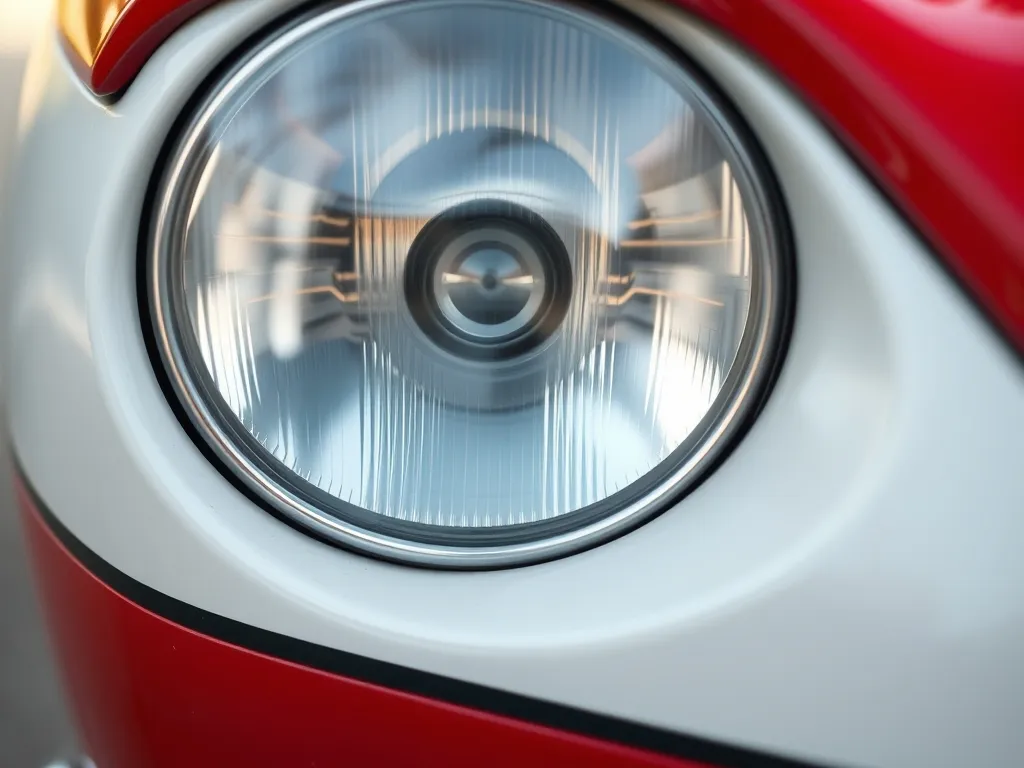
What causes a headlight to cloud
Headlight lenses are made of a plastic called polycarbonate rather than glass. This plastic is lighter and more impact resistant, but it reacts to sunlight. Ultraviolet rays slowly break down the outer coating that protects the lens. Once that coating fails, the plastic underneath begins to yellow and cloud. Road debris adds a second layer of wear to the lens surface. Sand, gravel, and grit thrown up from the road create tiny scratches across the front of the light. Those scratches scatter light instead of letting it pass through clearly. Combined with UV damage, this scattering is what gives an aged headlight its hazy look.
Weather plays a role as well, especially for cars parked outside through changing seasons. Heat cycles from sun exposure followed by cold nights can stress the plastic further. Cars kept in direct sun for long stretches often show clouding sooner than those parked in shade or a garage. The rate of clouding varies from one car to the next based on these conditions.
Why cloudy lenses matter beyond looks
A cloudy headlight changes how much light actually reaches the road at night. Scattered light through a hazy lens does not project the same way a clear lens does.
Drivers often notice this as a dimmer or more diffuse beam pattern after dark. The change happens gradually, so it can go unnoticed until the lens is compared to a new one.
Clouding also affects the overall look of the front of a car.
Two clear headlights on either side of a grille give a finished appearance to the front end. When one or both lenses are yellowed, the mismatch stands out against the rest of the body. This is often what prompts someone to look into restoration in the first place.
The cloudiness itself does not mean the bulb or wiring has a problem. It is strictly an issue with the outer plastic lens becoming worn or discolored. A car with clouded lenses can otherwise run its lighting system normally. Restoration addresses the lens surface, not the electrical components behind it.
How restoration generally works
Restoration starts by sanding down the damaged outer layer of the lens with graduated grits. This removes the yellowed, oxidized plastic and the scratches sitting on the surface. The sanding moves from a coarser grit to a finer one to smooth the plastic evenly. Each pass prepares the lens for the next, finer stage of the process.
After sanding, the lens is polished to bring back clarity and shine. Polishing compounds work the surface until it reflects light the way a new lens would. This step is where most of the visible change happens, since sanding alone leaves the plastic looking dull. The combination of sanding and polishing is what restores the lens's transparency.
A final protective coating is applied to seal the freshly polished plastic. This coating replaces the factory UV layer that broke down over time.
Without it, the lens would begin clouding again fairly quickly under sun exposure. The coating step is part of what makes the restoration hold up under normal driving conditions.
What restoration does not change
Restoration works on the lens surface, not on the bulb, housing or wiring inside.
A dim light caused by an aging bulb will not improve from lens work alone. Anyone noticing a change in brightness alongside clouding should mention both details when discussing the service. That way the right issue gets addressed.
Deep cracks or chips in the lens are a separate problem from surface haze. Sanding and polishing address clouding and light scratching, not structural damage to the plastic. A cracked lens usually needs replacement rather than restoration. A detailer can look at the lens and explain which category it falls into.
Restoration also will not change the design or shape of the headlight itself. It restores the existing lens to a clearer state rather than altering its style. Anyone expecting a different look or shape from the original part should look at replacement instead. Restoration is best understood as a clarity fix for the plastic already installed.
Getting headlights looked at
Headlight restoration fixes lenses that have yellowed or clouded. The service is done indoors by appointment alongside other detailing work. Bringing up any concerns about beam brightness or lens condition ahead of time helps the technician assess the right approach. Call (360) 555-0138 or send the form to ask about headlight restoration.
Glossmere Detailing
Call (360) 555-0138 or send the form to request an appointment.