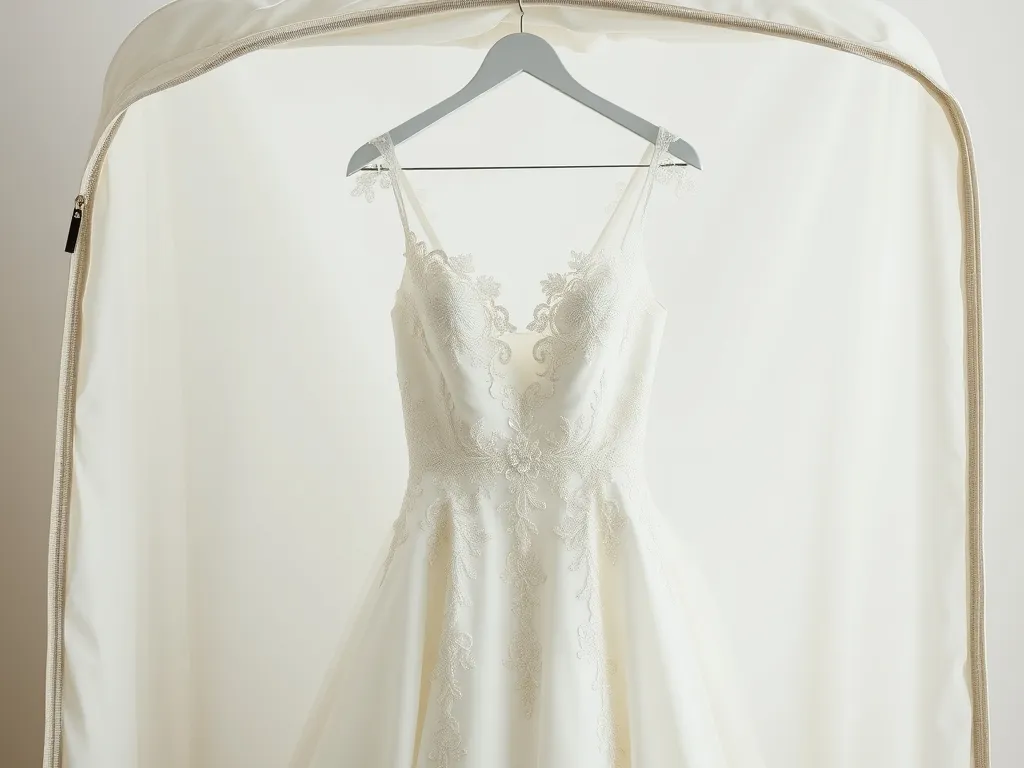
Acting on stains soon after the event
A wedding dress often picks up stains from food, drink, makeup or grass without anyone noticing at the time. These marks set into fabric quickly, especially on silk, satin or delicate lace.
Waiting weeks or months to address a stain gives it more time to bond with the fibers. Taking the dress in soon after the event helps remove marks.
A stain that looks faint right after the wedding can darken or spread once it sits untreated. Champagne, for example, can turn invisible until it oxidizes and leaves a yellow mark over time. Makeup and body oils behave the same way, sinking deeper into fabric the longer they remain. This is one reason many cleaners suggest addressing a dress within a short window rather than storing it first.
Trying to treat a stain at home with water or a household cleaner can push the mark deeper into delicate fabric. Rubbing a stain, even gently, can also damage embroidery, beading or a fragile lace overlay. Pointing out every mark, including ones that seem minor, gives a cleaner full information to work with. A short list of what happened, such as spilled wine near the hem, also helps.
Storing the dress in the days after
A dress left in a garment bag from the shop or a plastic covering for too long can trap moisture. Trapped moisture leads to mildew, discoloration and a musty smell that can settle into the fabric. A cool, dry closet away from direct sunlight is a better short-term spot than a damp basement or attic. Keeping the dress away from cardboard boxes also avoids acid transfer that can yellow fabric over time. Hanging the dress by its fabric loops rather than the shoulders spreads the weight more evenly across the seams. A padded hanger reduces the chance of stretching at the shoulder line. A dress with a heavy skirt or train benefits from extra support underneath rather than hanging weight alone at the top. This matters most in the weeks before a decision about long-term storage or preservation gets made.
Choosing between flat and hung storage
A dress with a heavy beaded bodice or a long train often does better stored flat than hung for a long stretch.
Hanging concentrates weight at a few points and can stretch fabric or thread over time. Flat storage spreads weight evenly but calls for a box wide enough to avoid tight folds. Tight folds left in place for months can turn into permanent creases that are hard to remove later.
A lighter dress in a simpler fabric, such as crepe or a plain silk, often hangs without much risk of stretching. The choice usually comes down to fabric weight, embellishment and how long the dress will sit in storage.
A cleaner familiar with wedding gowns can look at the fabric and construction and suggest the better option. This is a useful question to raise before settling on a storage method alone.
Acid-free tissue paper works well in either method, cushioning folds in a box or padding out a hanging bodice. Cedar blocks or lavender sachets placed nearby can discourage moths without touching the fabric directly. A breathable garment bag, rather than sealed plastic, lets the dress air out slightly even while stored. Checking on a stored dress occasionally catches problems early before they spread through the fabric.
Considering preservation
Preservation is a more involved process than a standard cleaning, meant to keep a dress ready for storage over the long term. It typically includes a thorough cleaning followed by acid-free packing meant to resist yellowing and fiber breakdown. Not every dress needs this level of care, particularly one that will see use again or minor future alterations. Asking a cleaner what preservation involves helps decide whether it fits the dress and the plans for it.
A dress passed down through a family or kept as a keepsake is a common candidate for preservation. A dress meant for resale, further alterations or another event often does not need the same treatment.
The decision often depends on what happens to the dress next rather than the fabric alone. A short conversation with a cleaner can clarify which path fits a particular dress.
Bringing the dress in
A dress ready for cleaning, storage advice or preservation is easiest to handle when brought in with notes about any stains. Mentioning where a spill happened, what caused a mark or which section of the dress took the most wear helps at drop-off.
A dress that has already sat in storage for a while can still often be treated, though sooner is generally better. There is no need to wait for a special occasion to ask about the options.
A cleaner who works with gowns regularly can explain the difference between a standard cleaning and full preservation before any work begins. Bringing photos of the dress from the wedding day can also help identify areas that changed color or texture since. Asking about the packing materials and what the process involves are reasonable questions to raise at the counter. None of these steps require a decision on the spot.
Anyone with a wedding gown to clean or questions about preservation can call (360) 555-0143 or send the form to start the conversation.
Pressmark Cleaners
Call (360) 555-0143 or get directions to drop off cleaning, shirts, or a garment for alteration.