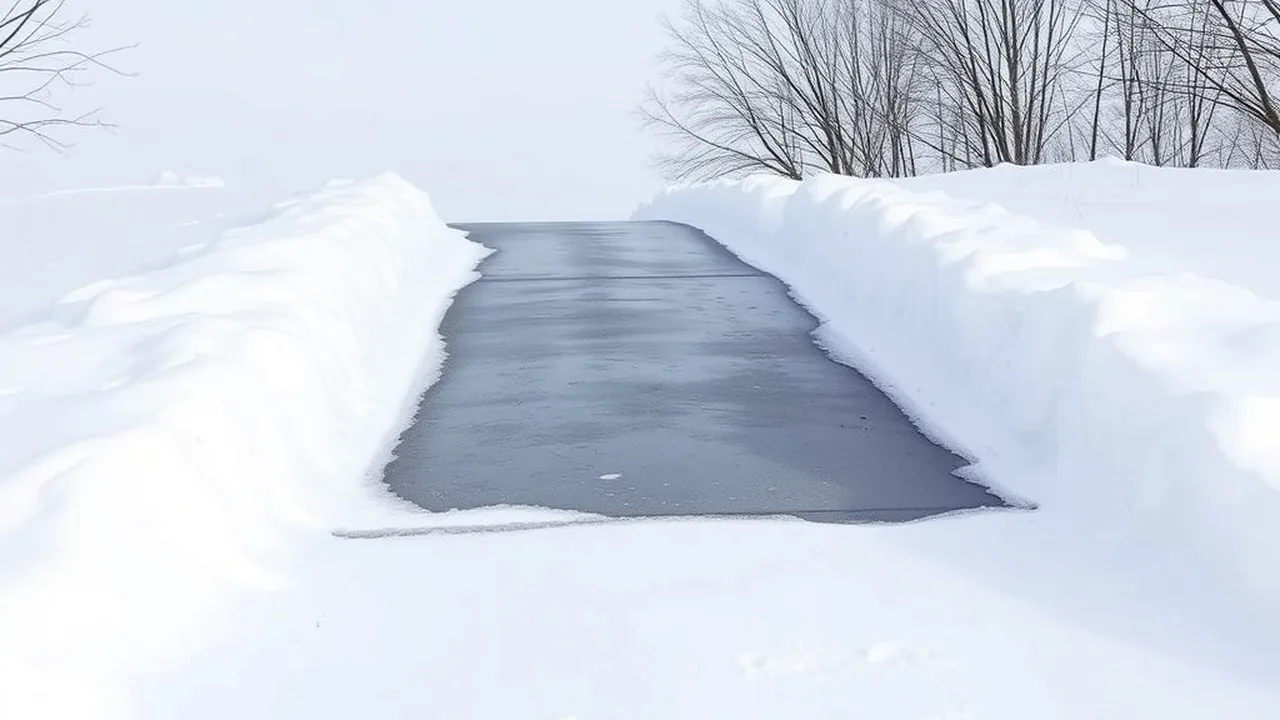
Clearing the driveway and yard
Before the first snow, walk the driveway and yard to spot items left out from warmer months. Garden hoses, toys, and lawn furniture can get buried and damage equipment during a plow run.
Move anything loose into a garage, shed, or storage area for the winter. A clear surface helps a plow blade pass smoothly without catching on hidden objects.
Check for low branches that hang over the driveway or walkway, since snow weight can bring them down. Trim back anything that sags close to where vehicles or foot traffic pass through. Look at trash cans and recycling bins, and plan a spot for them that stays clear of the plow path. Small changes now prevent bigger problems once snow begins to fall regularly.
Rake leaves and debris from the yard edges near the driveway before the ground freezes.
A layer of leaves under early snow can hide uneven ground or a sprinkler head. Store hoses and disconnect them from outdoor spigots to prevent freezing damage. These small steps make the property easier to read once snow covers the ground.
Flagging hazards before the first snow
Sprinkler heads, shallow drain covers, and utility boxes near the driveway can hide under a few inches of snow. Mark these with a stake or flag tall enough to show above the expected snow depth. A hazard that stays hidden risks damage from a plow blade or a shovel. Flagging takes little time and can prevent a costly repair later in the season. Uneven pavement, cracked curbs, and low spots in the driveway also deserve a marker before winter sets in. These spots can catch a plow edge or collect ice differently than the surrounding surface. Walk the property in daylight and note anywhere the ground shifts or dips. A simple list, even a photo, helps track these spots through the season.
Planning where cars park
Decide ahead of time where vehicles will sit during a snow event, since plowing needs a clear driveway.
A car left in the driveway during a storm can block a full plow pass. Move vehicles to a garage or a street spot, if local rules allow overnight parking. Planning this in advance avoids a delay when the plow arrives.
For a shared driveway or a property with multiple vehicles, agree on a rotation or a clear spot in advance. Multiple cars parked at odd angles can turn a quick pass into a longer, more careful job.
Consider whether a second vehicle can move to a nearby lot during a storm. A little coordination among household members keeps the driveway ready for each visit.
Marking edges and low spots
Stakes along the driveway edge give a plow operator a clear line to follow in low visibility. Without a marker, a snow-covered edge can blend into the lawn or garden bed nearby. Reflective stakes work well for early morning or evening plowing, when light is limited. Place them far enough into the ground to withstand wind and the weight of plowed snow.
Garden beds near the driveway benefit from the same treatment, especially if they sit close to the edge. A plow blade can't tell the difference between lawn and a flower bed once snow covers both.
Mark the border with stakes spaced a few feet apart along the visible edge. This small step protects landscaping through a season of repeated plowing.
Timing your preparation
Most of this preparation works best before the first real snowfall of the season, while the ground is still visible. Waiting until after a storm makes it harder to spot hazards or place markers accurately.
Early fall, once leaves have mostly dropped, is a practical time to walk the property. This gives enough room to handle repairs or landscaping changes before winter arrives in force.
Revisit the property after the first snow to confirm markers are still visible and holding their position. Wind and the weight of snow can shift a stake or flag over time. A quick check after each storm keeps the plan working through the rest of the season. This habit takes little time compared to fixing damage from a missed hazard.
A property marked and cleared ahead of time is ready for the season's first plow visit, whenever it arrives. Preparation done early tends to hold up through the heaviest storms later in winter. Consistent upkeep, checked every few weeks, keeps the driveway and walkways ready throughout. This routine reduces surprises once snow becomes a regular part of the season.
Getting help before winter sets in
A property that's cleared, flagged, and planned ahead makes the first snow of the season far less stressful. Taking these steps early helps a plow operator work quickly and safely across the property. Marking hazards protects landscaping, curbs, and driveway edges from accidental damage. Planning parking keeps the driveway open for each scheduled visit. Reviewing these steps with a snow removal company before the season starts can highlight anything missed. A company familiar with the property can point out spots that need extra attention. Sharing a parking plan or hazard list ahead of time saves confusion during the season's first storm. This kind of preparation pays off most during the first few snowfalls of winter.
Preparing a property ahead of winter makes the season's first snowfall easier to manage. A cleared driveway, flagged hazards, and a parking plan set the stage for smooth service all season. Call (360) 555-0122 or send the contact form to talk through getting a property ready before plow season begins.
Plowmere Snow Services
Call (360) 555-0122 or send a quote request to get a driveway, lot or walkway cleared this winter.