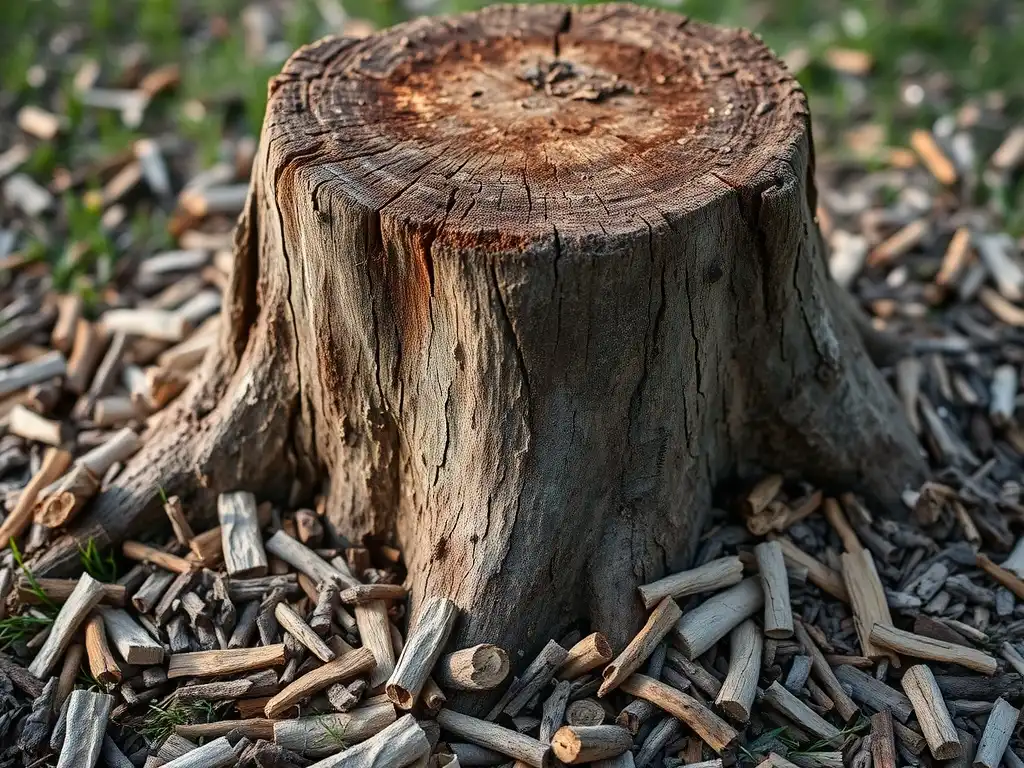
What stump grinding leaves behind
Stump grinding cuts the visible wood down below ground level with a mechanical grinder. The hole that remains fills with wood chips mixed with soil, ready for grass or mulch. The root system stays in the ground and breaks down on its own over time. Within a season the spot often blends into the rest of the lawn.
Because the roots remain, grinding tends to disturb less of the surrounding soil than digging one out. Nearby plants, walkways, and buried lines are less likely to be affected during the work. The chips left behind can be raked out or left to settle into the ground. Many yards recover their appearance faster this way.
What stump removal involves
Stump removal takes the entire root ball out of the ground.
This usually leaves a noticeably larger hole that needs to be filled and leveled afterward. The area may need topsoil, seed, or sod to look finished again. Removal creates more restoration work than grinding does.
Removing the whole root system means nothing is left to decay or shift the ground later. This matters most for anyone planning to pave, build, or plant in that exact spot. Without lingering roots, there is less chance of future settling in the soil. The ground can be prepared for new use right away. Because removal disturbs more soil, it can affect nearby roots, cables, or drain tile if they run close by. Anyone considering removal should think about what else sits near the stump. A visual check of the yard before work begins often answers most of these questions. Knowing what is nearby helps set expectations for the results.
Comparing the ground surface after each
After grinding, the surface sits close to level but the ground below still holds the old root mass. Grass or mulch typically covers the spot within a short stretch of time. The area is usable for foot traffic and light landscaping fairly soon. Heavier construction on that same spot is not usually recommended right away. After removal, the surface starts as an open hole that needs backfilling before anything else happens. Once filled and leveled, the ground can support new plantings, pavers, or a small structure. This process takes a bit more time before the yard looks finished. The final result depends on how the hole is filled and packed.
Both methods change how a yard looks and functions once complete. Grinding suits a spot meant to blend back into the lawn without much disruption. Removal suits a spot with plans for something new built or planted. Thinking ahead about the intended use helps guide the choice.
Root systems and regrowth
Some tree species send up new shoots from roots left in the ground after cutting. Grinding removes the stump itself but does not always stop this kind of regrowth.
Removal takes out more of the root system, which can reduce the chance of new shoots appearing. The species of tree plays a large part in how likely this is.
Roots from certain trees can also travel farther than expected, popping up shoots some distance from the original spot. This is worth mentioning when discussing which method fits a particular tree. A person familiar with the species can offer some perspective on what to expect. Not every root system behaves the same way once cut.
Choosing based on future plans
The right choice often comes down to what happens in that spot next. A lawn area that needs to look tidy again is usually well served by grinding. A spot destined for a patio, garden bed, or new planting benefits more from full removal. Matching the method to the plan avoids redoing the work later.
Cost and effort differ between the two approaches, and so does the time each takes to complete. Grinding is generally the quicker of the two processes.
Removal takes longer because of the digging and backfilling involved. Weighing time against the intended outcome helps narrow down the decision.
Neither method is universally better, since each solves a different problem in the yard. Thinking through what the space needs to do afterward is the clearest way to choose. A short conversation about the tree, the soil, and the plans for the area usually points to an answer. That conversation is worth having before any equipment arrives.
Getting ready to decide
A look at the stump, the surrounding soil, and what sits nearby usually informs which method makes sense.
Photos of the area and a note about future plans for the spot can help frame the conversation. Anyone unsure which option fits their yard can start by describing what they want the space to become. That description shapes the recommendation more than anything else.
Weather, soil type, and the size of the stump can all factor into which approach works better in a given yard. None of these details need to be figured out alone ahead of time.
A conversation with someone familiar with both methods can walk through the options. That discussion often clears up which path fits the situation.
Anyone weighing the two options can call (360) 555-0123 or send the online form to talk through what the yard needs. A short conversation about the tree and the space around it usually points toward the right method. Reaching out is the easiest way to get a clear answer.
Limbcrest Tree Care
Call (360) 555-0123 or send the quote form to reach Limbcrest Tree Care.