Why the words matter
Ordering eggs at a brunch cafe can feel confusing with all the different terms. Each word describes exactly how long the eggs cook and how the yolk turns out. Knowing a few common terms makes it easier to order exactly what sounds good. A little familiarity with the terms turns a long menu into an easy choice. Brunch menus often list eggs as part of a larger plate rather than alone. A breakfast plate, for example, usually lets a guest choose how the eggs are cooked. Understanding the terms ahead of time speeds up the order and avoids guesswork. A server can also explain any term that sounds unfamiliar on the menu.
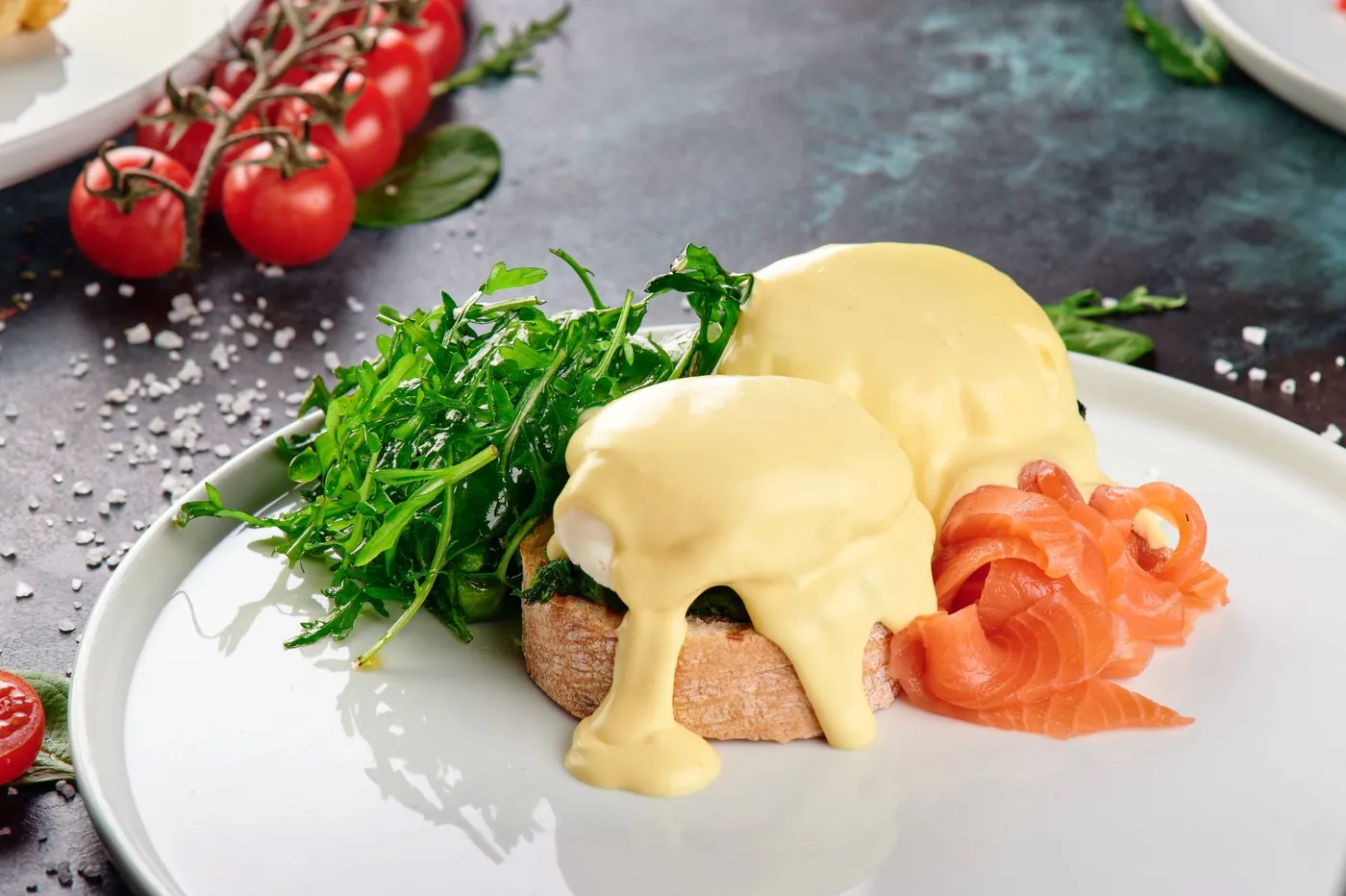
Eggs can be served on their own or built into a larger dish like a benedict.
Learning a few basic terms helps with ordering across many different egg dishes. The same terms come up again and again on almost every brunch menu. Once the terms are familiar, ordering eggs anywhere becomes simple and quick.
Sunny side up and over easy
Sunny side up eggs are cooked on one side only, with the yolk left runny. The white sets while the yolk stays soft and bright in the center.
This style shows the yolk clearly since the egg is never flipped. It works well on a plate next to toast or breakfast potatoes.
Over easy eggs are flipped briefly after the first side sets in the pan.
The yolk still stays soft and runny, but the top gets a light seal. This style covers the yolk with a thin layer of cooked white. Guests who want a runny yolk but a fully cooked white often choose this order.
Over medium and over hard describe eggs cooked longer after the flip. Over medium leaves a partly soft yolk, while over hard cooks the yolk through completely. Choosing between these styles comes down to how much yolk should stay soft. Naming the exact style avoids a surprise when the plate arrives.
Scrambled and soft cooked
Scrambled eggs are beaten before cooking, so the yolk and white mix together fully.
The eggs are stirred in the pan until they form soft curds throughout. Some cafes cook scrambled eggs softer, while others prefer a firmer, drier curd. Asking for a specific texture helps the kitchen match the order to taste.
Soft cooked eggs are usually boiled briefly in the shell rather than fried. The white sets fully while the yolk stays soft and pourable inside. This style is less common on a brunch menu than fried or scrambled eggs. It still comes up on some menus as an alternative to a fried order.
Hard cooked eggs are boiled longer, until both the white and yolk are firm throughout. This style holds its shape well when sliced and added to a plate. It appears less often as a stand-alone brunch order than the other styles. Knowing the difference helps when a menu lists more than one boiled option.
Poached eggs and benedict style
Poached eggs are cooked gently in water rather than in a pan with oil or butter.
The white wraps around a soft, runny yolk without any browning on the outside. This style is common on dishes that call for a soft yolk to spill over the plate. A dish like eggs benedict usually calls for eggs poached this way.
Eggs benedict layers a poached egg over an English muffin with a sauce on top. The poached egg is the centerpiece, and the yolk stays soft when cut. This dish shows how a single cooking style can define a whole plate.
Some guests ask for a firmer poached egg if a runny yolk is not preferred. The kitchen can usually cook the egg a little longer to firm up the yolk. Speaking up about the preferred yolk texture helps the dish match what is wanted. A clear request avoids sending a dish back to the kitchen.
Choosing an egg order for the table
A table with several guests often includes a mix of egg preferences in one order. Naming the exact style for each plate helps the kitchen prepare every order correctly. A shared understanding of the terms makes it easier for a group to order quickly. Simple, clear requests keep the table moving through the meal together.
Sunhollow Brunch Cafe
Call Sunhollow Brunch Cafe at (360) 555-0109 or send the form to plan a visit or an order.