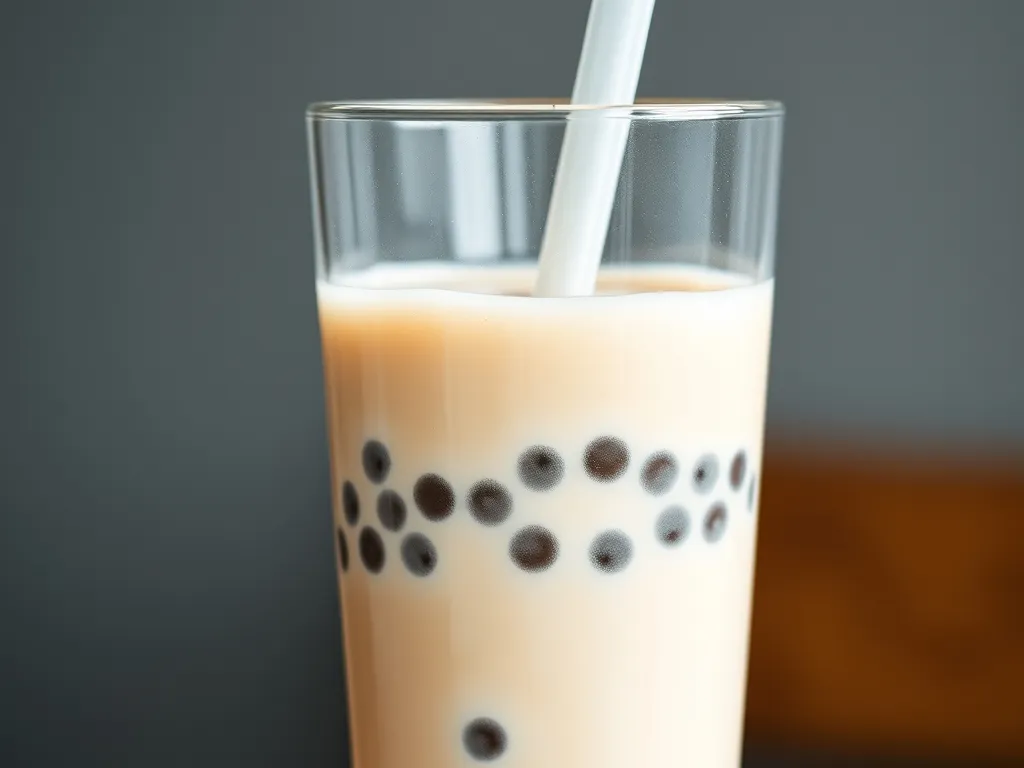
Tapioca pearls up close
Tapioca pearls are the topping most people picture when they think of bubble tea, and they sit at the bottom of the cup. Cooked pearls have a soft, chewy bite that gives way easily, unlike a hard candy or a raw fruit piece. The flavor is mild on its own, so pearls often carry whatever syrup they were cooked or soaked in. A wide straw is needed to pull pearls up through the drink along with the liquid. Pearls work well in a milk tea, since the chewy texture pairs with a creamy base rather than competing with it. A drink built around a strong flavor, such as taro or brown sugar, tends to highlight the pearls without overpowering them. Because pearls sit at the bottom, stirring the drink before the first sip spreads a few pearls up higher in the cup. Leaving the drink to sit too long can make the pearls firmer than they were when fresh.
Fruit jelly up close
Fruit jelly offers a firmer, more structured bite than tapioca pearls, closer to a soft gel than a chewy candy. Jelly cubes hold their shape well in the cup and do not soften much even after sitting in the drink.
The flavor is usually more distinct than pearls, since jelly is often made with a specific fruit taste built in. This makes jelly a good match for a drink where a bright, fruity note is welcome.
Because jelly holds its shape, it pairs naturally with fruit tea, where the bright base already leans toward that same fresh character. A milk tea can also carry jelly well, especially when the jelly flavor contrasts with a creamy base rather than repeating it. Jelly tends to be easier to drink through a straw than pearls, since the pieces are usually smaller and softer to bite through. A first-time drinker often finds jelly a gentler introduction to toppings than a chewier option.
How toppings change a drink
A topping changes more than texture, since most toppings are prepared with some form of syrup or sugar. This means a topping-heavy drink can taste sweeter overall than the same drink ordered without extras. Factoring this into the sweetness level chosen at the counter helps keep the final cup balanced. A drinker who prefers lighter sweetness can ask for a lower level when adding a topping.
Toppings also change how a drink is meant to be enjoyed, since most require a wide straw to pull them up from the bottom.
A drink without toppings finishes quickly, while a topping-heavy drink is often sipped slowly to let the pearls or jelly come through with the tea. This slower pace suits a longer visit rather than a quick stop. Skipping toppings entirely is also a reasonable option for a simpler drink.
Beyond pearls and jelly, other common toppings found at bubble tea counters include popping boba and pudding, each with its own texture. Popping boba bursts with liquid inside on the first bite, offering a different sensation than a chewy pearl. Pudding brings a smooth, custard-like texture that softens a drink rather than adding chew. Trying one new topping at a time makes it easier to know which texture is preferred going forward.
Ordering toppings with your drink
Toppings are usually ordered at the same time as the drink itself, named right after the sweetness and ice level.
A typical order includes a milk tea with tapioca pearls added, spoken as one continuous request at the counter. Some counters allow more than one topping in the same cup, while others limit it to keep the drink balanced. Asking ahead about how many toppings a single cup can hold avoids surprises when the drink arrives.
A drinker unsure which topping to choose can ask the counter which one pairs with the drink already chosen. Staff behind the counter prepare toppings regularly and can describe the texture and flavor in a few words. Comparing two toppings side by side, such as pearls and jelly, before deciding is a reasonable way to choose. Once a favorite pairing is found, reordering the same combination becomes quick on future visits.
Toppings can also be requested on the side rather than mixed directly into the drink, depending on how the counter prepares orders. This keeps the topping's texture separate until the drinker is ready to add it. It also allows a shared drink to be split with only one portion getting the topping added. Either approach keeps the choice flexible rather than fixed once the order is placed.
Trying toppings for the first time
A drinker new to bubble tea benefits from starting with one topping rather than combining several at once. Tapioca pearls in a familiar milk tea is a common starting point, since the flavor stays simple while the texture is new. Fruit jelly in a fruit tea is another straightforward pairing, since both share a bright, fresh character. Building up to a combination of toppings comes more naturally once each one is familiar on its own. Texture preference varies from person to person, so a topping that one drinker enjoys may not suit another right away. Asking a friend which topping they prefer can offer a useful starting point without ruling anything out. Ordering a small portion of a new topping alongside a familiar drink lowers the risk of a cup that does not work. Over a few visits, most drinkers settle into one or two toppings they return to often.
Pearlnest Tea House
Call (360) 555-0108 or send the form to order from Pearlnest Tea House.